
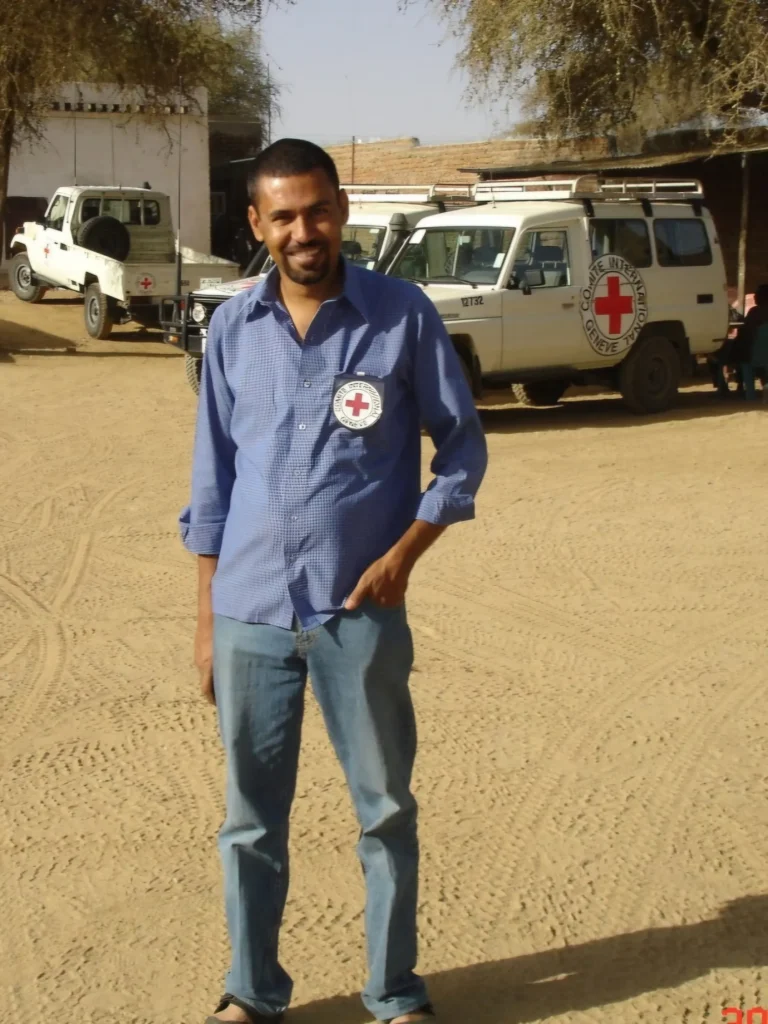
Back From Pakistan
After returning from Pakistan in late 2001, fresh off the great donkey-powered escape across the mountains (yes, that story), I was immediately thrown back into the thick of it. Assigned as a flying Water & Habitat (WatHab) engineer, I was responsible for restoring bombed-out water networks in five provinces — Jalalabad, Kandahar, Faizabad, Ghazni, and Panjshir.
My job? Fly into broken cities, fix shattered infrastructure, dodge leftover landmines, and somehow avoid losing my mind… all while earning a salary that wouldn’t even cover an appetizer in Geneva.
I looked at my paycheck: 7.5 million Afghanis. Sounds impressive, right? Until you convert it to USD: $137.50 per month.
That’s right. While I was managing projects across five provinces, flying across Afghanistan like some sort of humanitarian rockstar, I was making less than a waiter’s tip at a fancy restaurant.
Life on $137.50 a Month
And yet, my position wasn’t even low-level. I was a Senior WatHab Officer, Grade 6 (with Grade 8 being the highest). By this time, I had already worked for the organization for more than nine years — which, in humanitarian years, is basically a lifetime and three reincarnations. That salary? It wasn’t my starting point. It was the glorious reward after nearly a decade of hauling pipes, fixing water systems in warzones, and surviving both actual explosions and daily office politics.
And let’s be honest — engineers aren’t cheap anywhere in the world… unless, of course, you’re an Afghan engineer in a conflict zone. Then apparently, you’re part humanitarian, part miracle worker, and part “discount item on aisle five.”
And it wasn’t just the salary. There was no insurance. No pension. No compensation if you lost your job. Forget about health benefits, job security, or anything close to what people have now. If something happened to you in the line of duty — like, say, being blown up by a landmine — your family wouldn’t even get a thank-you note.
But back then, I wasn’t really thinking about salary. I was too busy keeping communities alive, dodging landmines, and trying to stretch that $137.50 across five provinces like it was some kind of wartime magic trick. I was too committed to humanitarian work — and possibly too brainwashed by Red Cross coffee — to stop and say, “Wait a minute… is this even legal?”
A Decade Without Training
And if you think the salary part was a joke, wait till you hear about training opportunities…
I joined the organization in 1992. Guess when I got my very first Red Cross training? 2001.
Yes, nearly a decade later, I was finally “rewarded” with the basic integration course — a mandatory training for expats before they step foot in a mission…
Then came my first professional training: Water and Sanitation in Emergencies, in 2004.
Twelve years after I started. Twelve. Years.
…But that was the game. If you were a local staff, far from the eyes of Geneva, and too committed to your work to complain, then congratulations — you were basically an invisible superhero. No capes, no thanks, and definitely no budget for training.
The Golden, Silver, and Mud Roads
One day, in between fixing broken water systems and praying my flight didn’t crash or get canceled due to “security reasons”, something finally clicked.
“If you’re Swiss, you have a golden road to becoming a delegate… If you’re European, you have a silver road… But if you’re Afghan… you have a mud road.”
At that time, the ICRC was less of an international humanitarian organization and more of a Swiss family business…
The Five-Year Bureaucratic Marathon
Ah, the classic bureaucratic ping-pong game — where my application bounced between Kabul and Geneva like a hot potato, and nobody wanted to admit they were the ones holding it.
For five long years, Yes five years (2001–2005) I chased my delegate application like an unpaid bill.
📌 Ask Kabul? “Oh, it’s Geneva — they’re not processing it.”
📌 Ask Geneva? “No, no, it’s Kabul — they don’t want to let you go.”
📌 Reality? Both were lying through their teeth.
…
Five years of being shuffled between Kabul and Geneva, five years of watching my file gather dust, five years of listening to “Maybe next year… maybe next time…”
And then, something unexpected happened.
Finally, Darfur
The same bosses who had once led the Water & Habitat and Admin teams returned…
“Shir Shah… are you still here?!”
Yes. Yes, I was.
This time, they took action.
Boom. An offer landed on my desk. A mission. A real, actual deployment.
And where was this “golden opportunity”?
Darfur, Sudan.
Of course.
…But was I going to complain? Not a chance.
This was the break I had fought for, waited for, and earned.
And so, the next chapter of my Red Cross adventure was about to begin — one that would take me from Afghanistan to Darfur, from local staff to international delegate.
Another Mission Impossible. Another warzone.
And, of course, another crazy story to tell. 😎