
By now, the Red Cross office had officially upgraded from the middle-of-nowhere Astana to Gulbahar — a place that, unlike its predecessor, resembled an actual village. Gone were the days of living on the edge of a mountain like a hermit; now, we had real shops, a barber, a local café, and even a few grocery stores. Civilization at last!
Life had changed drastically. I no longer had to endure my daily 150 km death ride between Panjshir and Charikar, which had basically turned me into an endurance rally driver. With most of the hospital projects nearing completion, I finally had time to breathe. More importantly, I was no longer a suspect. Even the higher-ups in the Northern Alliance knew who I was — not because they particularly liked me, but because at least by now, they had stopped assuming I was a Taliban spy waiting for the perfect moment to hand them over to their enemies. Progress!
Meanwhile, Hans Peter had finally completed his mission and was more than ready to flee. After a full year of dealing with the bureaucratic headaches, mine-infested roads, and the general insanity of working in a war zone, I imagine he practically sprinted toward the airport the moment his replacement landed. And who was stepping into his shoes?
Enter Kim Gordon Bates — a man who proudly called himself KGB. Yes, KGB — which, considering our location and the general paranoia about spies, was a bold choice. Kim was British, with a French twist, and had spent part of his life as a journalist, meaning he had seen his fair share of political nonsense and human drama. But rather than writing about wars, he had decided to jump into one.
I had two theories about Kim’s career move:
He was genuinely passionate about humanitarian work and up for the challenge. Or he had simply gotten bored of peace and figured, “You know what sounds fun? Running a Red Cross office in a war zone!”
Either way, his arrival immediately lightened the mood. Unlike the ever-serious Hans Peter, Kim had a sense of humor, which in this environment, was as valuable as an armored vehicle.
But, of course, no transition in my life could ever go smoothly.
Just as Kim was settling in and figuring out the insanity of his new job, my boss in Kabul threw a wrench into everything.
“We need Shir Shah back in Kandahar. Specifically, Sarpoza Prison.”
Ah yes, Sarpoza Prison — because nothing says “welcome back” like managing sewage and water supply for a Taliban-run prison.
The moment Kim read the email, his reaction was immediate and clear:
“No. We’re not sending him anywhere.”
Now, this was flattering, except for one small detail — I didn’t technically belong to Panjshir. I was under the Kabul delegation, meaning they had the final say.
For me? It made no difference. At this point, I was used to being shipped around like a humanitarian Amazon package. But now, it had turned into a bureaucratic custody battle — with two offices fighting over me like I was a rare collector’s item.
Kabul had a solution. They would send Engineer Iqbal to replace me in Gulbahar, while I would return to Kandahar.
Now, let’s talk about Iqbal for a second.
Imagine someone twice my age, with the same title as me (Senior WatHab Engineer), but with zero motivation to learn, adapt, or exert energy in any way.
He was a classic bureaucrat — comfortably stationed in Kabul, sipping infinite cups of tea, and ensuring that no one could accuse him of working too hard.
The Red Cross didn’t want to fire him (God forbid!), but they also had no idea what to do with him. So, in their infinite wisdom, they decided:
“Hey! Let’s send him to Sarpoza Prison in Kandahar! Maybe he’ll finally do something!”
Brilliant, right?
Wrong.
Sending Iqbal to Kandahar was like sending a penguin to the desert — it was only a matter of time before he had to be rescued.
Within days of arriving, Iqbal managed to get himself reported to the Taliban’s morality police.
Why?
Because he refused to wear local clothes.
Now, the Taliban weren’t exactly flexible when it came to fashion choices, and they weren’t impressed by Iqbal’s Western-style attire.
So, they issued a very polite ultimatum:
“Remove him from Kandahar immediately, or we’ll arrest him and personally educate him on proper attire.”
And just like that, Iqbal was out, sent scurrying back to Kabul, where he could sip his tea in peace, far away from the dangerous horrors of doing actual fieldwork.
But now, with no engineer in Kandahar, the office suddenly realized:
“Wait a minute… Shir Shah just finished in Panjshir… He can go back!”
Kim, of course, saw through this nonsense immediately.
He knew Iqbal wasn’t exactly the most efficient option, and he had no intention of trading me for someone who’d contribute more to office tea breaks than actual work.
So he responded with a simple and logical counteroffer:
“No. You can send Iqbal to Kandahar. Leave Shir Shah here.”
Kabul wasn’t happy, but they reluctantly agreed — I would stay in Gulbahar for a few more months, and Iqbal could continue perfecting the art of looking busy in Kabul.
With my extended stay in Gulbahar secured, I finally decided to visit my family after nine months. By now, spring had arrived, and the Anjuman Pass had thawed just enough for travel.
Going home after nearly a year felt surreal.
But nothing was more humbling than what happened next.
My youngest child, who was just three years old, took one look at me and immediately turned to her mother.
“Who’s this uncle?”
The challenges? Nothing humbles you more than being mistaken for a guest in your own home.
While I was enjoying a few weeks of well-earned rest, the Red Cross was busy negotiating with both factions to open a new access road into Northern Alliance territory.
This new route was supposedly a game-changer — cutting down the journey from four days of mountain trekking to just one day of travel.
It sounded too good to be true.
Spoiler alert: It was.
This new cross-line route required traveling through Kapisa province — Taliban-controlled territory — before crossing into Gulbahar, held by the Northern Alliance.
Just before leaving Kabul for Gulbahar, I received an urgent request from Kim — he wanted a proper toilet and shower in his residence. Now, for most people, this wouldn’t seem like an unreasonable request. But in Panjshir and Gulbahar? Luxury was defined as having a bucket and a handle (Tabo) and a place where you could at least pretend you had privacy.
A “shower” meant boiling water in the kitchen, carrying it to the bathroom, and carefully managing your rationed hot water like it was liquid gold. But Kim, being Kim, had decided he needed something more civilized. So, like a true Red Cross handyman, I went shopping in Kabul for the full plumbing setup — pipes, toilet seat, shower fittings, and other essentials.
And because nothing in my life was ever easy, I now had to carry these supplies across one of the most dangerous frontlines in Afghanistan.
We left Kabul, heading towards the infamous Kapisa-Gulbahar crossline. My companion for this adventure? Nabiullah, an admin officer from the Gulbahar office, who, like me, had no idea how we were going to pull this off.
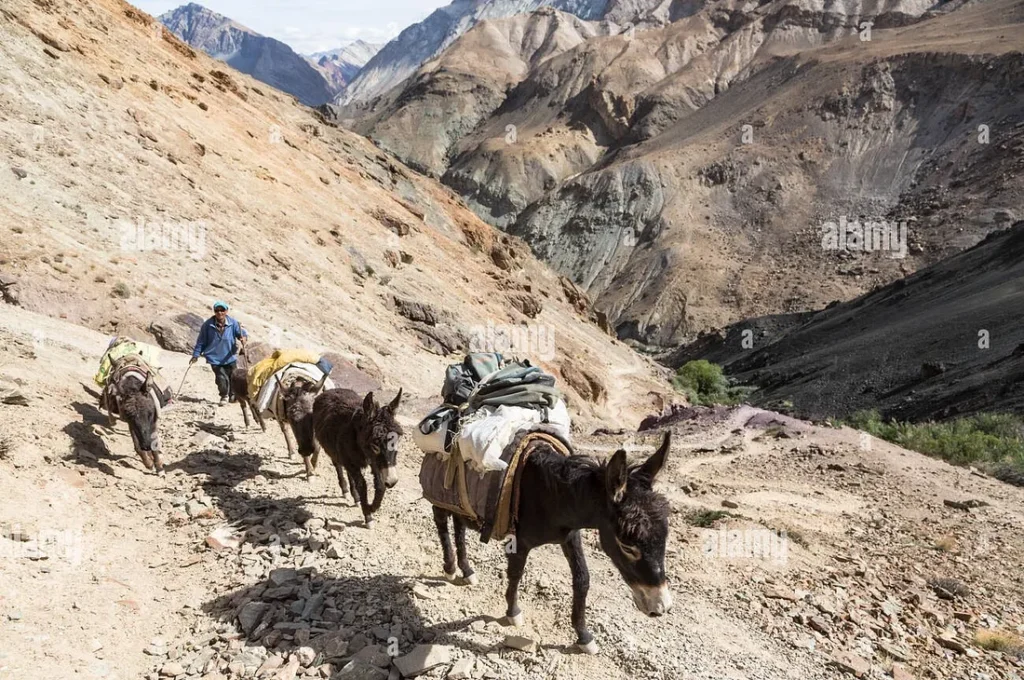
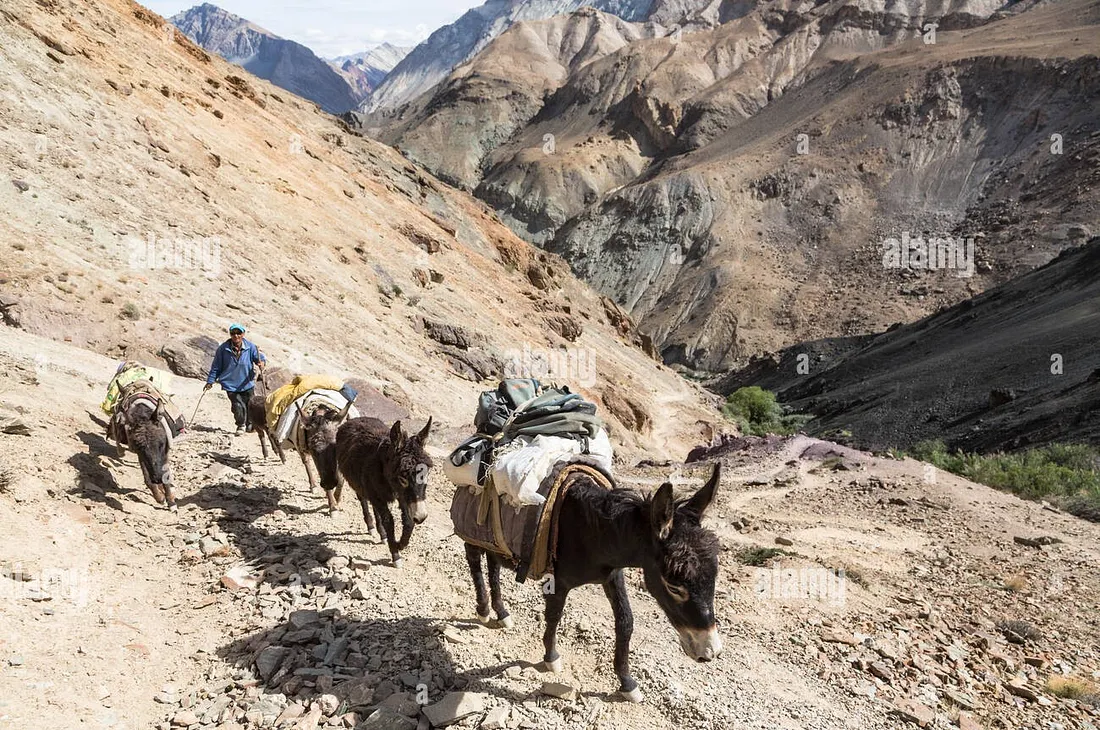
After a long and bumpy ride, we reached the end of the road — literally. This was the spot where Taliban had planted anti-tank mines to prevent Northern Alliance forces from advancing. Beyond this point, no vehicles could pass — only donkeys, smugglers, and people with an exceptionally low regard for their own safety.
Red Cross convoy rules were clear: “We stop here. You continue on foot. Good luck.”
Fantastic.
Now, Nabiullah and I stood there, staring at our cargo of bathroom fittings, wondering how the hell we were supposed to carry them across a warzone.
Luckily, we weren’t alone. The area was swarming with donkey operators, all eager to take our load across — for a price, of course.
We picked two donkeys and one operator, loaded up Kim’s VIP bathroom package, and prepared for the next phase of our absurd journey.
Before we could even reach the official crossline, we had to walk through a known minefield.
Now, the mines were technically anti-tank mines, meaning they were designed to explode under the weight of a vehicle.
But…
Who’s to say a slightly overweight humanitarian worker wouldn’t also set them off?
As we stepped onto the path, I had one comforting thought — at 52kg, I was probably too light to trigger them.
“Maybe I should have skipped that last meal in Kabul… just to be safe.”
After what felt like an eternity of carefully stepping only where others had stepped before, we made it past the minefield.
Congratulations!
We were now in no-man’s land.
This was the wildest part of the journey.
This area wasn’t controlled by either the Taliban or the Northern Alliance. Instead, it was run by armed smugglers — men who worked for both factions, transporting weapons, drugs, fuel, and whatever else was profitable across the frontlines.
Officially, they were “neutral businessmen.”
Unofficially, they were “whoever paid them more that day.”
Walking through this lawless zone felt like stepping into a real-life action movie, except I was carrying shower pipes instead of weapons.
We followed the donkey operator up into the rocky mountains that separated the two warring sides. There was no proper walking path — just scattered stones and the hope that our guide knew where he was going.
We had no idea where we were heading.
The donkeys seemed more confident than we were.
We trusted them more than the owner.
And just when I thought this absurd journey couldn’t get any worse, it did.
Halfway through the trek, the donkey drama began.
One of the donkey handlers — who, mind you, was supposed to be helping us — suddenly sabotaged his own donkey, making it collapse dramatically onto the ground. It was an award-winning performance, really. The donkey, however, was not in on the act. It stood up immediately, unharmed, clearly wondering why it had been forced into this nonsense.
But the donkey handler, in an Oscar-worthy display of fake outrage, turned to us and declared that we had broken his donkey’s leg.
“You must pay for my donkey now!”
I looked at the donkey, who was standing, blinking, and looking just fine.
“Nothing’s broken. He’s literally standing right there,” I pointed out, waving my hand at the perfectly functional animal.
But no, our master scam artist was determined to make a payday out of this.
“He is injured! You pay now!”
The argument went back and forth, me playing the role of logical negotiator, him playing the role of shameless extortionist, and the donkey playing the role of an innocent bystander in this ridiculous theater production.
To calm the situation, I tried a compromise. “Once you bring us and our items to the other side, I will pay you — even for your imaginary donkey injury.”
He didn’t like that answer.
The man pretended to be outraged, huffed, threw a fit, and stormed off, abandoning us and the donkeys right there on the narrow mountain path.
Great.
Now, we were stuck in the middle of a literal warzone, with two donkeys standing around like they were waiting for further instructions, and our super-important shower items — which we had been entrusted to deliver to Kim — scattered dangerously close to rolling off a cliff.
Get SHIR SHAH AYOBI’s stories in your inbox
Join Medium for free to get updates from this writer.Subscribe
Neither of us had ever handled donkeys before.
So, our options were:
- Try to figure out donkey operations on the fly. (A disaster waiting to happen.)
- Leave the cargo behind and decide where to go. (An even bigger disaster.)
Going back was not an option — the Red Cross convoy had already left for Kabul.
Going forward? Maybe.
But there was one problem — the donkey owner had walked that way, which didn’t sit right with me.
Still, it was either follow him or risk getting lost in the mountains and becoming dinner for some very lucky wild animals.
And let’s not forget — this was 1999. No GPS. No Google Maps. No phone. Just vibes.
I turned to Nabiullah, who looked equally confused.
“Let’s follow the paths if we can still spot them. If we’re lucky, we’ll find our way to the other side where the Red Cross vehicles are waiting.”
So, we started descending deeper into the valley, moving cautiously toward the next hill.
And then, bam — we turned a blind corner and walked straight into an ambush.
Standing there, waiting for us with a gun, was none other than our friendly neighborhood donkey extortionist.
Was he there to apologize for the inconvenience? To escort us safely across the crossline?
Of course not.
He had fully committed to his new role as a ruthless kidnapper, and he was not breaking character.
“Come with me,” he barked, waving his gun at us.
Now, I have no interest in being shot, but I also wasn’t about to play the role of a terrified hostage.
“My friend, you really don’t need to point a gun at us. We’re already following you. We have no weapons, no backup, and we’re too tired to argue.”
And just like that, we became hostages in the dumbest kidnapping ever.
For the next fifteen minutes, we walked under his armed supervision, deeper into the valley, until we reached a small, random, isolated room in the middle of nowhere.
A tiny, 3×4 meter stone room, with a tiny 30×30 cm window and a single wooden door.
“Get inside,” he ordered.
We obeyed, and the door locked behind us.
The message was clear — unless we paid for the donkey’s fake injury, we weren’t leaving.
I tried explaining that we literally had no money, but he wasn’t interested.
“Search us,” I offered.
And so, he did.
His big payday?
- A few hundred Afghanis (barely enough to buy lunch).
- My laptop (which he had no idea how to use).
- My watch (which I suspect he just wanted for himself).
- My jacket (because apparently, even kidnappers get cold).
Then, he left and locked the door again.
Fantastic.
Now, Nabiullah and I sat in this tiny room, trying to figure out what to do.
Escape?
Bad idea. We didn’t know the area, and if they caught us, they might actually get angry.
Negotiate?
Might work — if we played it right.
Another hour passed before he returned — with another man.
This one was probably his boss.
Same demand — “Pay up or stay here.”
While negotiating with the donkey owners — ahem, I mean, our captors — for our release, I felt oddly confident.
Why?
Because, believe it or not, this wasn’t my first time being kidnapped.
That’s right — this was kidnapping attempt number two. And compared to the first time, this was child’s play.
The first time? Now that was a proper hostage situation. Twenty days in captivity. Real kidnappers. Serious negotiations. Actual ransom paid by my family. And, oh yeah — a whole lot more aggression and professionalism than the clowns I was dealing with now.
These guys? Amateurs.
They were so unmatured — yes, I’m inventing words to describe their incompetence — that I was actually more bored than scared.
The first time, I had to fight for my survival.
This time? I was arguing over a donkey’s fake injury while being held in a tiny, freezing mountain shack by part-time kidnappers who also moonlighted as donkey rental services.
Honestly, if I ever wrote a manual on How to Survive a Hostage Situation, these guys would be in the Beginner’s Guide to Clueless Kidnappers section.
I switched tactics.
“Look, guys… if anything happens to us, the Red Cross will contact your boss. They’ll track you down. And you will be in trouble.”
That seemed to work.
They exchanged nervous glances, muttered something, and then walked back outside.
Another fifteen minutes passed, and they came back with an announcement.
“You can go.”
And just like that, we were free.
But then, in an unprecedented display of stupidity, I started arguing.
Not about our safety.
Not about our belongings.
But about my laptop.
“I need my laptop back,” I said. “It has my files. And anyway, you won’t be able to use it — the office will block it. No one will buy it from you.”
Cue a long, ridiculous argument.
In the end?
I got my laptop back.
(But not my watch or jacket — apparently, those were non-negotiable.)
By now, it was already dark, and we had to find our way to Gulbahar in pitch black.
I turned to Nabiullah.
“Let’s follow the tracks and keep moving. If we’re lucky, we’ll make it to the other side without any more surprises.”
After another 40 minutes of walking, we finally reached the last hill.
And then, in the distance, shining like a beacon of hope, we saw them — The Red Cross Land Cruisers.
It felt like seeing land after being lost at sea.
With renewed energy, we rushed toward the convoy, expecting a hero’s welcome — maybe even some cheering and applause.
Spoiler: That didn’t happen.
We arrived, half-frozen, exhausted, and jacket-less, and all we got was:
“Where the hell have you been?”
But inside, I was celebrating. Because despite everything — the minefield, the donkey scam, the kidnapping, and the cold mountain trek — I had survived.
After enduring the last round of Northern Alliance checkpoints, where I was subjected to the usual interrogation routine — “Who are you? Where are you coming from? Are you a spy?” (Honestly, at this point, I should’ve just handed them a pre-written script) — we finally arrived at the Red Cross office in Gulbahar.
And breathed.
For the first time in hours, maybe even days, I felt like I was actually free.
No donkey scams. No amateur kidnappers. No random men demanding ransom for an injury that didn’t exist. Just a chair, some questionable Red Cross coffee, and the satisfaction of surviving yet another insane episode of my life.
This experience didn’t just test me — it made me stronger. If anything, it felt like the universe was running a survival boot camp just for me, training me for something even crazier in the future.
And let’s be real — knowing my luck, crazier things were definitely coming.
Because the stories of my Red Cross adventures — and all the insanity that came with them — don’t end here.
Oh no.
This is just another chapter in a book that’s far from finished.
More madness to come.
Stay tuned.