
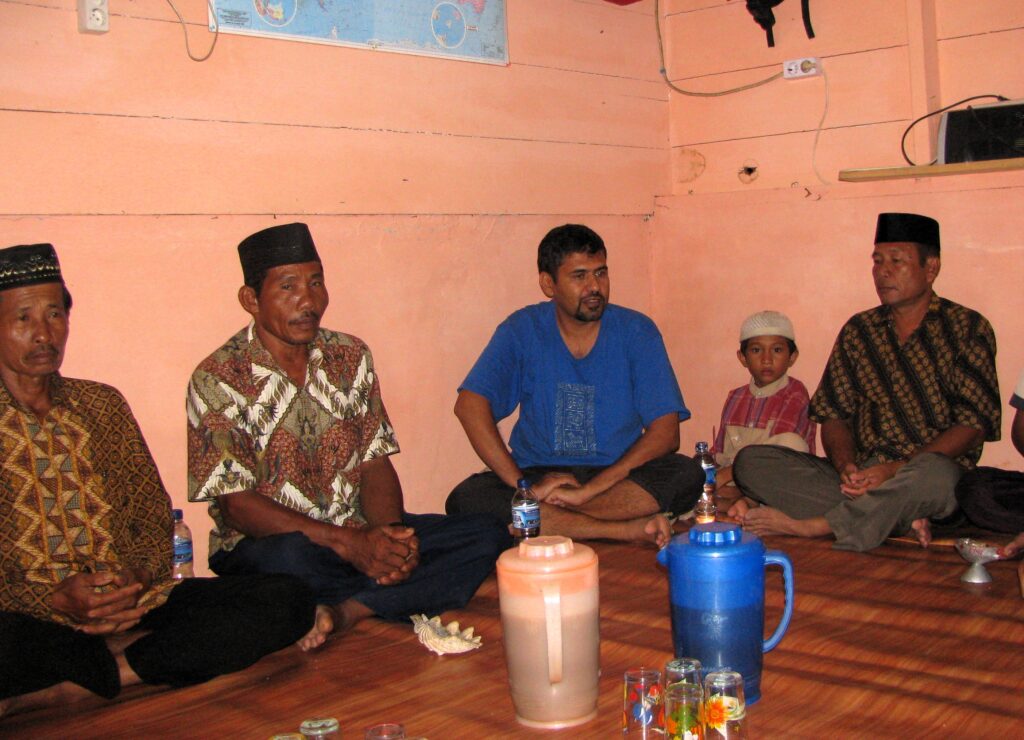
After more than three decades working with the Red Cross and Red Crescent Movement across Asia, Africa, the Caribbean, and the Pacific, people sometimes ask me what leadership means.
My answer has changed over the years.
When I was younger, I thought leadership was about having the right answers. Today, I believe it is about asking the right questions, earning trust, staying true to your principles, and helping people find hope when everything around them feels uncertain.
I did not learn leadership in a classroom. I learned it from people affected by conflict and disasters, from volunteers who gave everything without expecting recognition, from exceptional mentors who inspired me, and, perhaps most importantly, from difficult leaders who showed me the kind of person I never wanted to become.
Growing up in Afghanistan during years of conflict taught me one lesson very early: the world is rarely black and white. Every conflict has different narratives, different perspectives, and different people who suffer. Living through those years taught me that humanity must always come before politics, and that impartiality is not simply a Red Cross principle; it is a way of seeing people first. That belief has stayed with me throughout my career.
Over the past 34 years, I have worked with colleagues from dozens of nationalities, cultures, religions, and professional backgrounds. I have learned that diversity is one of the greatest strengths of humanitarian work. The more you travel, the more you realize that there are many different ways to live, to think, and to solve problems. I have been fortunate to visit more than 70 countries, and each journey has reminded me that we should be slower to judge and quicker to understand.
Leadership begins with respect.
One lesson stands above many others: trust is the most valuable resource in humanitarian work.
Money helps, vehicles help, warehouses help, technology helps, but when people trust you, when colleagues trust you, and when partners trust you, impossible things suddenly become possible.
Trust cannot be demanded. It must be earned through consistency, honesty, humility, and keeping your word even when circumstances become difficult.
Another lesson is that communication is far more than speaking. Throughout my career I have discovered that the best leaders usually listen more than they talk. Communities often know what they need. Local colleagues often have the best solutions and understand realities that international staff may never fully see. Leadership is not about having every answer; it is about creating an environment where the best answers can emerge.
I have also learned that there is rarely a perfect decision. Humanitarian leaders work with incomplete information, limited resources, changing situations, and urgent needs. Waiting for perfect certainty often means acting too late. Experience teaches you to make the best decision possible with the information available, while remaining ready to adapt as circumstances change.
One belief has guided me throughout my career:
If the goal is genuinely to help people, there is almost always a way forward.
It may not be easy; it may require creativity, it may require patience, it may require compromise, But I have rarely believed that something is impossible simply because it is difficult.
Working under many different supervisors also shaped my understanding of leadership. Some inspired me through kindness, wisdom, and integrity. Others taught me valuable lessons by showing behaviors I chose never to repeat. Every leader, good or bad, became part of my education. Leadership is not only about learning what to do, it is also about deciding what not to do.
Perhaps the greatest lesson is this:
Leadership is not about being the most important person in the room. It is about helping others succeed. It is about serving before leading. It is about remaining calm when others are anxious. It is about protecting dignity when people have lost almost everything. And it is about leaving an organization, a team, or a community stronger than you found it.
After 34 years, I still consider myself a student of leadership. Every emergency, every country, every colleague, and every community continues to teach me something new.
This article is the first in a series where I will share lessons from the field, not because I believe I have all the answers, but because experience only has value when it is shared.
If these reflections encourage one humanitarian worker, one volunteer, or one future leader to approach their work with greater empathy, courage, and trust, then these lessons will have served their purpose.
Because, in the end, humanitarian leadership is not measured by the titles we hold.
It is measured by the lives we touch, the trust we build, and the hope we leave behind.
Until the next lesson from the field…