
Humanitarian assignments are temporary.
We arrive, receive a title, take responsibility for a team or an operation, work for a few months or a few years, and eventually, we leave.
Someone else takes our office. Someone else receives our title. The organization continues.
So, after more than three decades in humanitarian work, I have increasingly asked myself a simple question:
What should remain after a leader leaves?
For me, the answer has never been a leader who has made themselves indispensable.
Quite the opposite.
I have always believed that one of the best signs of leadership is that when the leader is away, things continue to work.
Decisions are made. Problems are solved. People know their responsibilities. The team does not wait for the boss to return.
If everything stops whenever the leader leaves the office, perhaps we should ask whether we have built a strong team or simply built a team dependent on one person.
My Job Was Never to Make the Team Need Me
Throughout my career, I have tried to empower the people working with me.
I delegated responsibilities. I encouraged people to make decisions. I trusted their professional judgment. I gave them space to solve problems.
And when mistakes happened, my message was generally simple:
Make mistakes. Learn from them. Just don’t keep making the same mistake without learning something.
Empowerment does not mean the absence of accountability.
It means giving people enough responsibility that accountability becomes theirs too.
There is an old Afghan saying about a wrestling master who teaches his student all his techniques, but keeps one final trick to himself, just in case the student one day challenges the master.
Sometimes I joke that perhaps I made the mistake of teaching my teams every trick I knew.
But even knowing what I know today, I would do it again.
Humanitarian leadership should never be about keeping knowledge or authority to ourselves so that people continue to need us.
Our job is not to create followers who depend on us. Our job is to develop people who can lead without us.
Trust Can Create Accountability
Over the years, I have worked within systems that relied heavily on procedures, approvals, controls, and layers of decision-making.
Controls are necessary.
We manage donor funds. We have responsibilities toward affected communities. Procurement, finance, safeguarding, security, and accountability systems exist for good reasons.
But I learned something important:
Control and accountability are not the same thing.
You can create more procedures. More signatures. More approvals. More reporting.
And still not create integrity.
During my eight years leading a delegation in the Philippines, I tried to build a different kind of accountability alongside the necessary organizational controls.
I trusted people.
And I wanted them to understand that being trusted came with responsibility.
When people know that someone genuinely trusts their judgment and integrity, many become even more careful, not because somebody is watching every decision, but because they do not want to betray the confidence placed in them.
Over those eight years, we maintained a record of zero corruption while giving team members meaningful responsibility and space to make decisions.
That experience reinforced something I had gradually come to believe:
You cannot create integrity through control alone.
Policies and controls can protect an organization and reduce opportunities for wrongdoing. But integrity ultimately comes from people.
A leader therefore has two responsibilities: build appropriate controls, and build a culture in which people want to protect the trust given to them.
Controls protect an organization. Trust empowers it. Integrity connects the two.
People Give More When They Feel Ownership
I was fortunate throughout my career to work with people who demonstrated extraordinary commitment.
There were times when deadlines approached and colleagues stayed beyond normal working hours to finish what needed to be done. I never instructed them to do so, and overtime was not part of their compensation.
I do not believe leaders should expect people to sacrifice their personal lives or accept inadequate compensation. People deserve fair working conditions.
But their commitment taught me something else.
Motivation is not created only by salary.
It also comes from purpose. Respect. Belonging. Responsibility. And ownership.
When people believe, this is our programme, our responsibility and our reputation, their relationship with work changes.
They stop simply implementing somebody else’s instructions. They begin leading.
The Paradox of Empowerment
There is, however, an interesting paradox in all of this.
When a team becomes highly capable and independent, many day-to-day matters no longer require the leader’s direct involvement.
That is exactly what we should be trying to achieve.
But it can also make leadership less visible.
A leader who controls every decision, attends every operational discussion, approves every small action and personally solves every problem can appear extremely busy, and extremely indispensable. A leader who develops capable people, delegates authority and creates systems that function without constant intervention may appear less operationally involved.
But perhaps that is not a sign that leadership has become less valuable.
Perhaps it is a sign that leadership is working.
I learned an important lesson from this:
The answer is not to empower less. It is to use the space created by empowerment differently and to communicate that contribution better.
When strong teams take ownership of day-to-day operations, leaders should move their attention toward strategy, representation, partnerships, innovation, mentoring, resource mobilization, anticipating future challenges, and creating new opportunities for the organization.
Empowerment should never mean disappearing as a leader.
It should mean leading at a different level.
What Did We Leave Behind?
When I look back at a humanitarian assignment, I do not want to measure it only by how many projects were completed or how much money was spent.
Those things matter.
But I also ask different questions.
Did we leave behind stronger people?
Did we develop systems that continued to function?
Did our partners trust the organization more than when we arrived?
Did we strengthen relationships rather than simply manage contracts?
Did local chapters gain greater capacity and confidence?
Did colleagues grow into leaders themselves?
Did communities receive something sustainable rather than something dependent on our continued presence?
In the Philippines, some of the things I value most are not physical assets.
They are relationships.
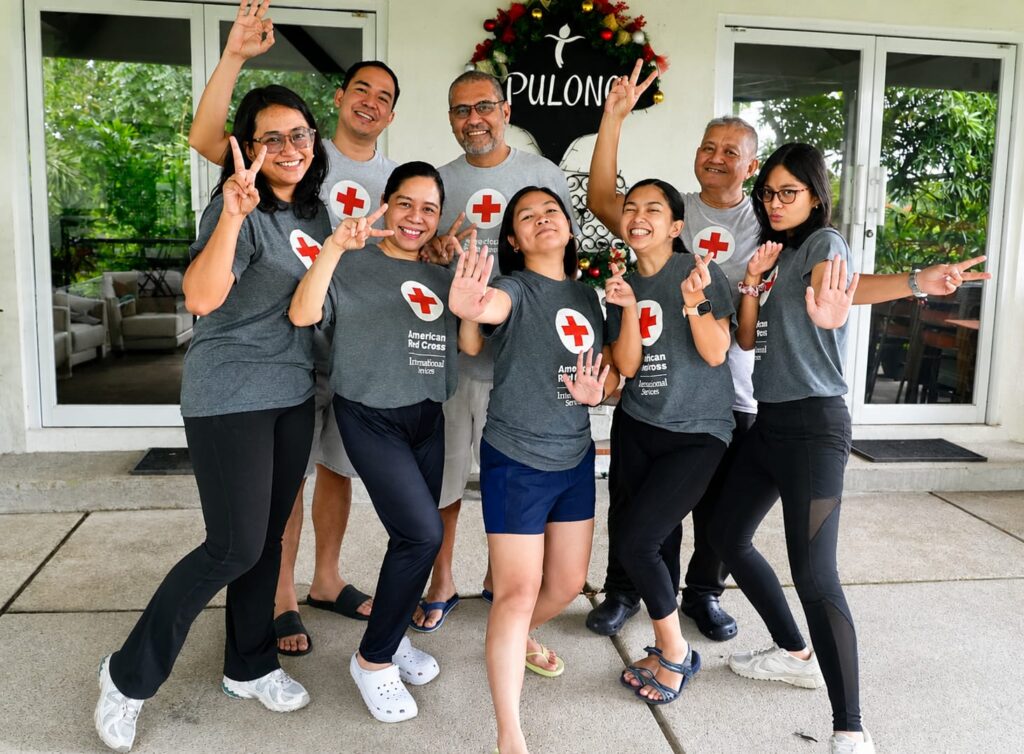
Relationships with the Philippine Red Cross, Movement partners, local leaders and communities.
A team that learned to operate with significant independence.
Partnerships built around common goals rather than organizational competition.
Relationships that reached from headquarters to chapters and local leadership.
And an organizational reputation that people associated with partnership, delivery, integrity, and trust.
Those things do not always fit neatly into a project logframe.
But they matter. And many of them can last longer than the projects themselves.
Leadership Is Temporary. Legacy Is Not.
There is a temptation in leadership to make ourselves indispensable.
To keep important relationships personally. To retain certain decisions. To be copied on everything. To make sure people know that without us, something will stop.
I understand that temptation.
Being needed can feel very similar to being valuable.
But they are not necessarily the same thing.
Humanitarian leaders, especially international ones, know from the beginning that we will eventually leave.
Our responsibility therefore cannot be to build something around ourselves.
It must be to build something capable of continuing beyond ourselves.
I could have made myself indispensable by keeping decisions, relationships and knowledge in my own hands.
I chose not to.
I could have kept one final wrestling trick for myself.
I chose not to.
And despite what empowerment may sometimes cost, I would still choose it over dependency.
I would still trust people.
I would still teach what I know.
I would still give capable colleagues room to make decisions.
I would still try to leave behind people who no longer need me to tell them what to do.
Because the purpose of leadership is not to prove how important the leader is.
It is to make other people stronger.
If everything collapses when we leave, perhaps we were indispensable.
But were we successful leaders?
For me, the better measure is much simpler:
When I leave, does the work continue?
If the answer is yes, if the people are stronger, the relationships remain, the systems function, and the mission continues, I do not see that as evidence that the leader was unnecessary.
I see it as evidence that the leader did the job.